One of the most anticipated events in The Shropshire Hills is the first Long Mynd Shuttle Bus of the season. The bus runs in the summer every Saturday and Sunday and goes from Church Stretton over the Long Mynd past Shooting Box, Bridges, Stiperstones, The Bog, SnailBeach and back over the Long Mynd past Wildmoor Pool and Duckley Nap to All Stretton.
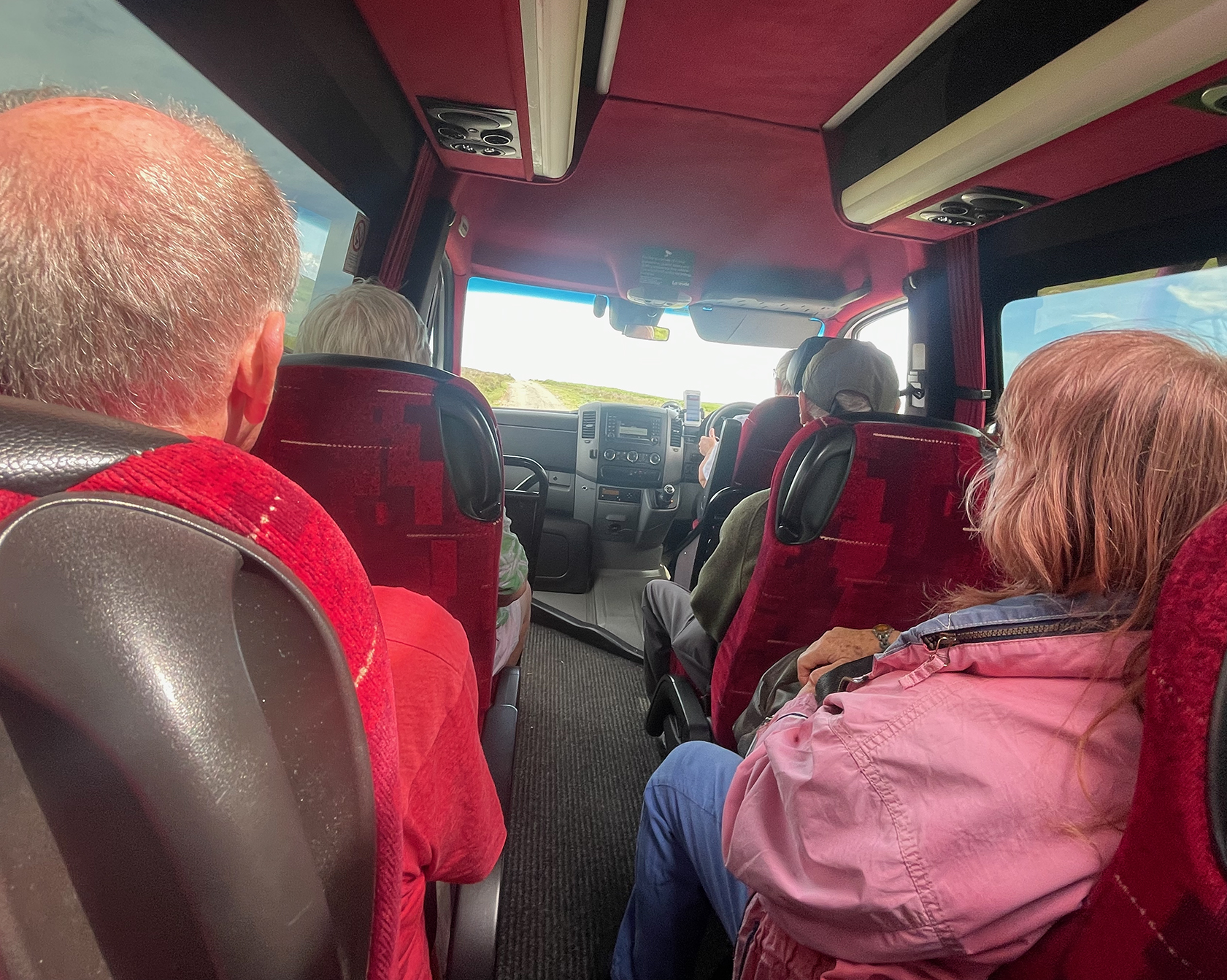
The bus was occupied largely by locals. Some were heading to The Bog Visitor Centre for lunch before catching the return service, while others simply stayed aboard for the full circuit, enjoying a couple of hours of magnificent scenery for the price of a bus fare. I paid the £7 hop on, hop off ticket and alighted at Shooting Box.
A broad track led me towards the trig point on Pole Bank, but before reaching it I veered right and began descending the hillside. The air rang with birdsong. Skylarks hovered overhead while meadow pipits parachuted down from the sky, their calls tumbling across the moor.
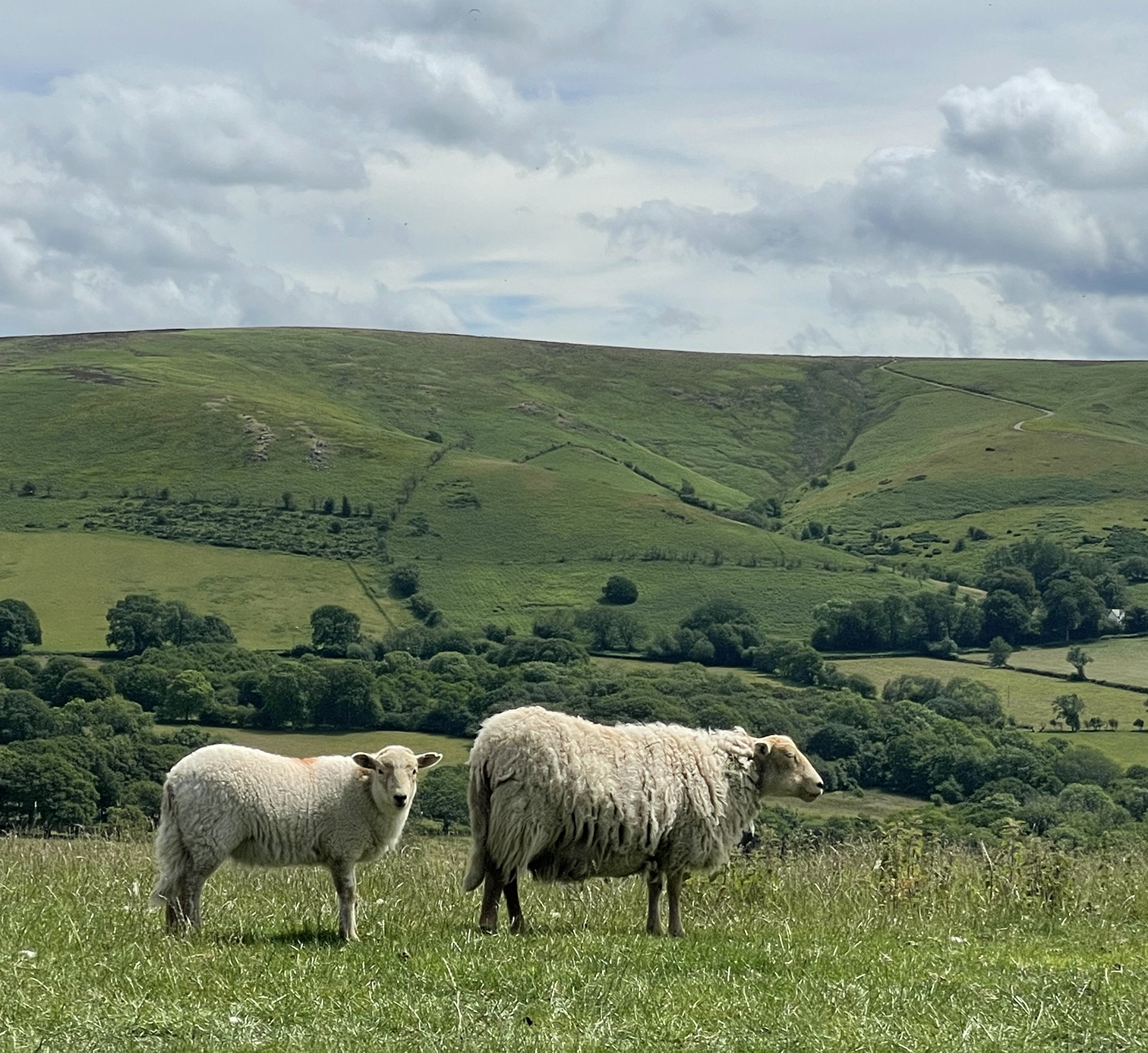
I found myself wondering how such tiny creatures could project their voices over such vast distances. Whinberries jostled for space amongst the bracken and heather, although it will be several months before the annual scramble to harvest them begins. I settled onto a grassy bank and spent a while listening to the birds, the warmth of the sun soaking into my back.
Above me, 23 paragliders and several gliders drifted across the sky like brightly coloured confetti. One unfortunate paraglider pilot was forced to land in a field at the foot of the Long Mynd. Having watched him descend, I could not help thinking about the long, steep climb back to the top carrying a heavy canopy.
To the west, the mountains of North Wales stood out with remarkable clarity. Among them, Cader Idris was instantly recognisable on the horizon. I continued down the hillside and followed a rough farm track towards Medlicott.
From this vantage point, the Shropshire countryside unfolded in all directions. Small fields were divided by thick hedgerows, interspersed with copses, woodland and isolated farms, while Bishop’s Castle sat nestled in a natural bowl of rolling green hills.
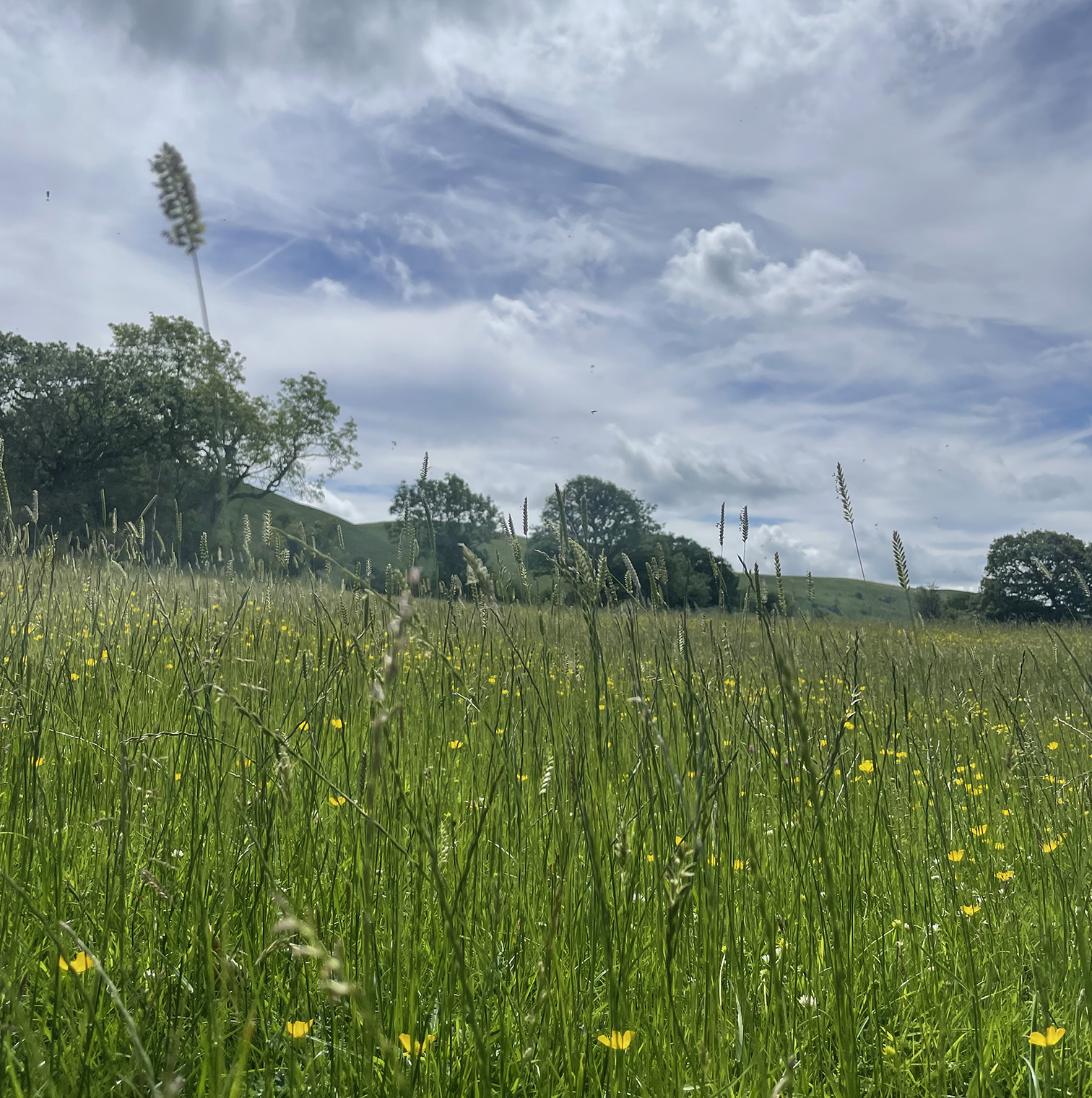
Medlicott is less a village than a scattering of farm buildings. Determined to improve my woeful natural navigation skills, I decided not to consult the map. Unsurprisingly, I promptly went the wrong way and found myself crossing two of the most beautiful hay meadows I have ever seen.
They did not quite rival the flower rich meadows of Romania, but they were impressive nonetheless. I stood for a while, listening to birds singing from the woodland edge and identifying wildflowers amongst the grasses.
Some of the birds I could hear, including the garden warbler, had flown all the way from sub Saharan Africa to return to this tiny corner of Shropshire. Their feat of navigation is astonishing, particularly when I struggle to find my way from Medlicott to Bridges without the aid of a map.
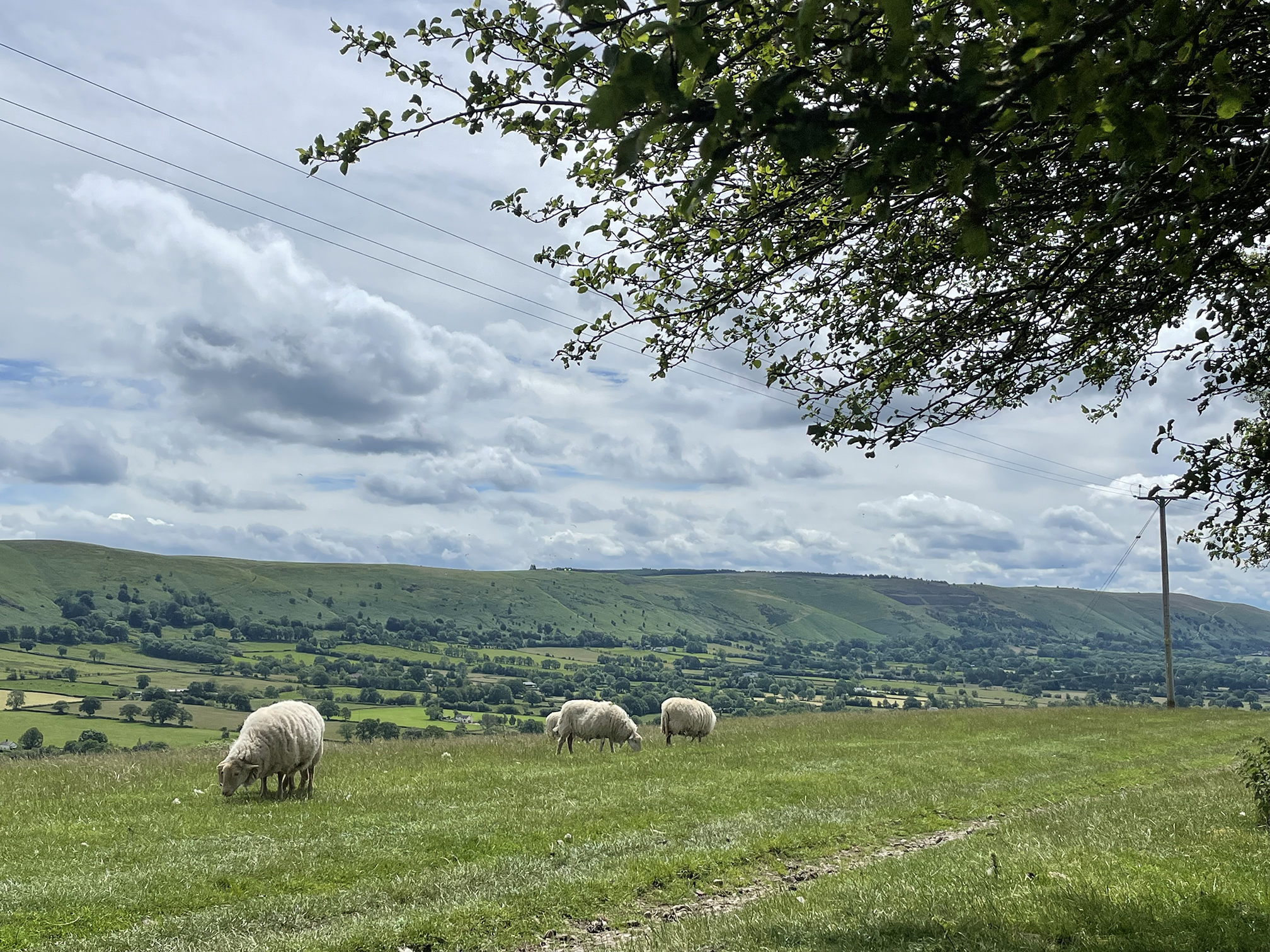
The weather could not have been better for walking: dry, warm and pleasantly comfortable. It was equally ideal for haymaking and, as I left Medlicott behind, I passed several farmers cutting, turning and gathering hay. It was a quintessential English countryside scene.
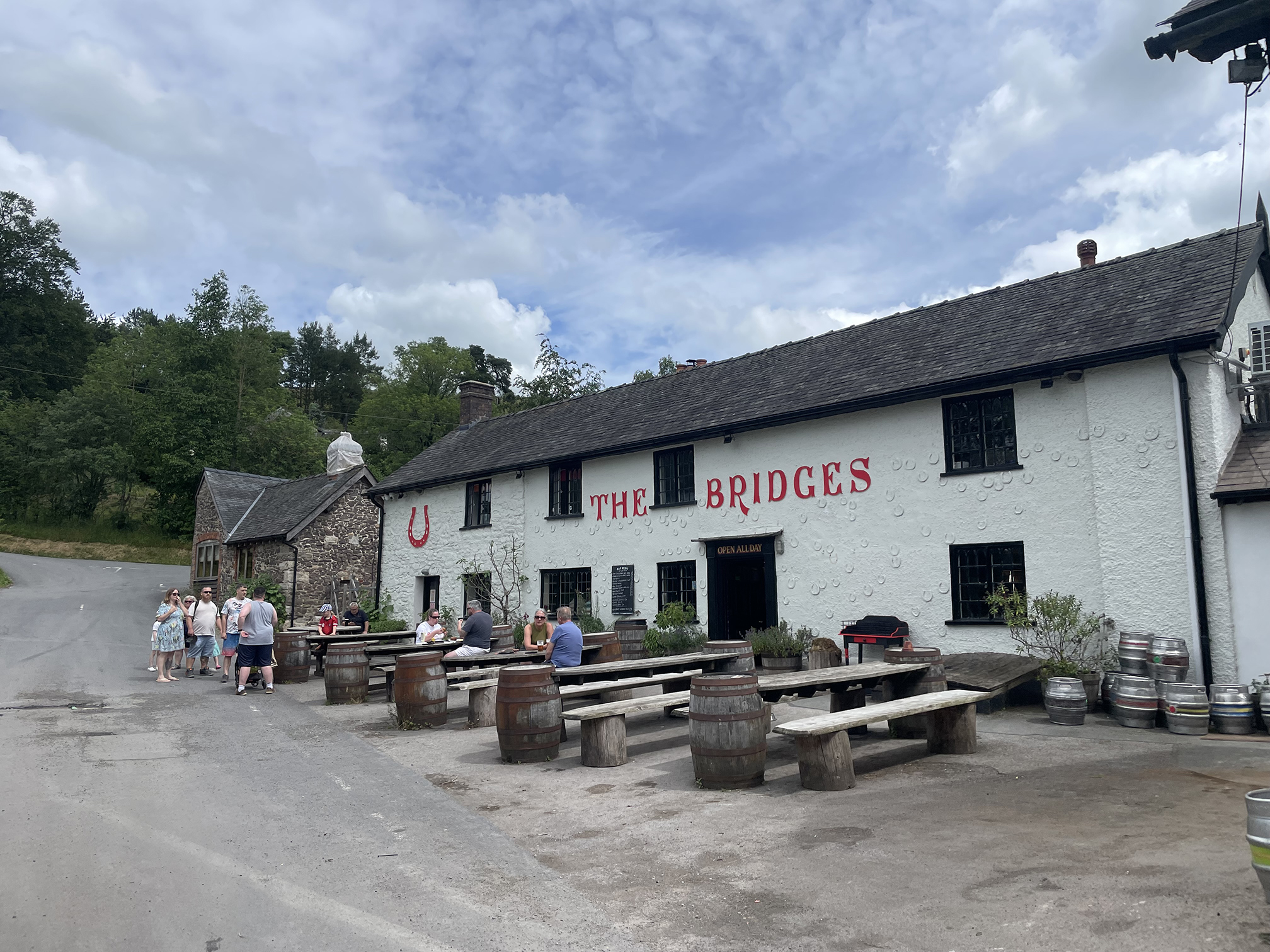
A couple of hours later I arrived at the pub in Bridges where, predictably, it was busy. Walkers relaxed with pints in hand while children splashed in the stream. After a plate of cheesy chips and a drink, I caught the Long Mynd Shuttle up to Duckley Nap.
The walk from Duckley Nap to Church Stretton is straightforward, descending through Carding Mill Valley, home to the National Trust’s visitor centre. Here I encountered, as usual, crowds of visitors, many from the Midlands. Among them were groups of Muslim women carrying picnic bags as they made their way towards the stream.
Families had established themselves along the water’s edge while children busied themselves building dams. Groups of young men chatted as they climbed towards the waterfall, while others escaped the afternoon sun by sitting beneath trees with a book. One of the things I love most about Carding Mill Valley is the diversity of people who come here. It feels a little like travelling abroad without ever leaving Britain.
It is easy to dream of distant and exotic destinations, but there are times when it is worth remembering just how much beauty exists close to home. Visitors travel from across the world to walk these hills and enjoy these landscapes. Sometimes it takes a day like this to remind us why.