This is my summary of the places we visited in the Caucasus. We didn’t manage to make it to Armenia.
Tbilisi
Street dogs are everywhere in Tbilisi, yet they seem remarkably well cared for. They lounge in the middle of pavements, wander lazily across busy roads and sleep peacefully in the shade. Some are even fortunate enough to have makeshift kennels complete with their names painted on them. Far from being treated as strays, they appear woven into the fabric of the city. Residents seem to accept them as part of everyday life and visitors quickly learn to do the same.
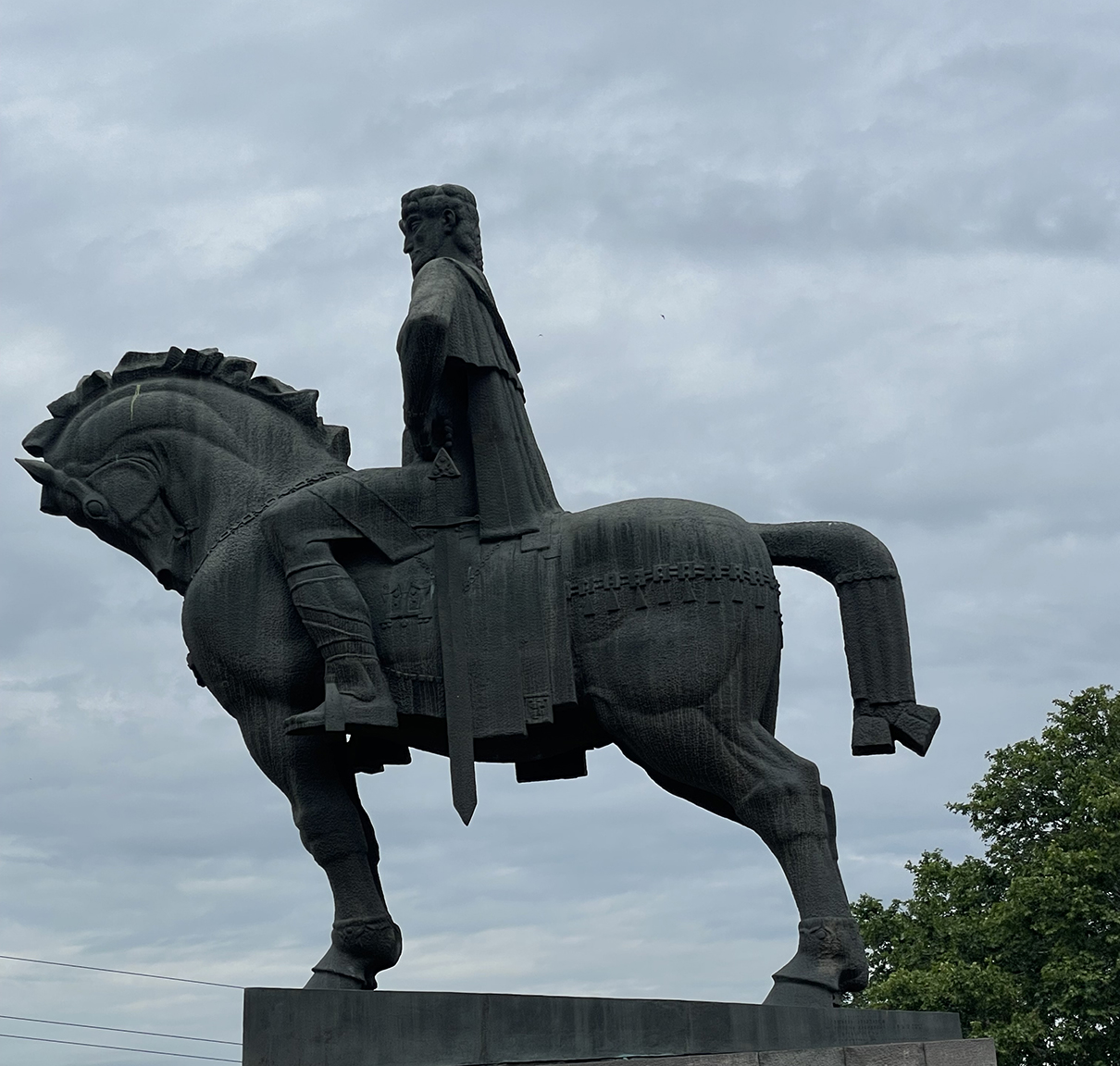
The people of Tbilisi struck me as serious. Smiles are not handed out freely, even by those working in hotels, restaurants and shops. It is not that people are unfriendly or unhelpful.
Rather, there is a reservedness about daily interactions that takes a little getting used to. Warmth exists, but it is rarely expressed through broad grins and enthusiastic greetings.
Black appears to be the colour of choice, regardless of the season. In the height of summer, buses and metro carriages are filled with passengers dressed almost entirely in black. Looking around, it often felt as though someone had forgotten to tell the city that lighter colours existed.
Combined with the generally serious demeanour of the locals, it gives the streets a distinctly monochrome atmosphere.
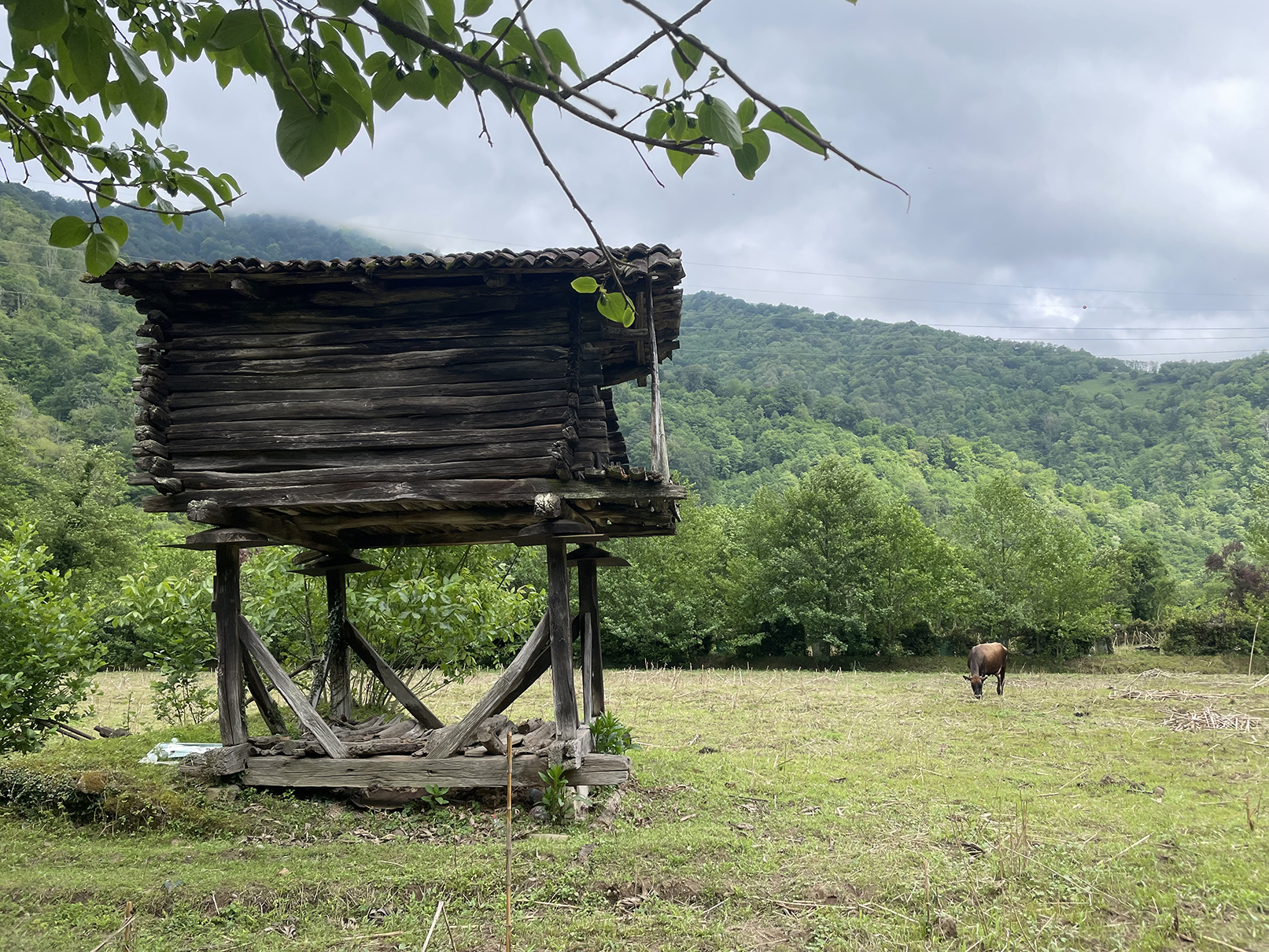
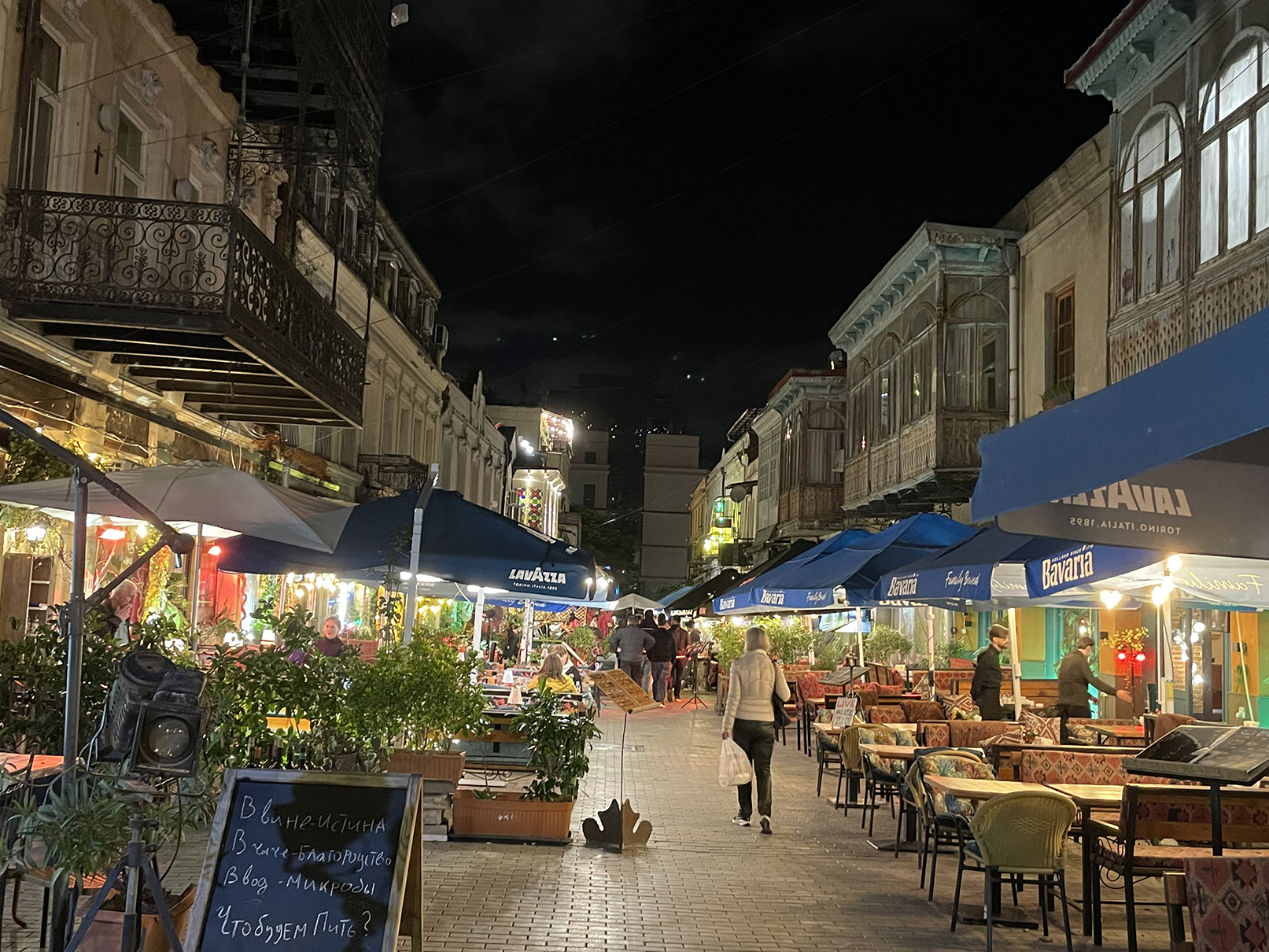
Tbilisi’s architecture is fascinating, but much of it appears to be engaged in a slow battle against gravity. Elegant balconies lean at improbable angles, facades are fractured by deep cracks and entire buildings seem held together by determination alone. In many countries, some of these structures would have been condemned long ago.
Yet washing hangs from courtyards, lights glow behind windows and life carries on as normal. Massive steel braces prop up walls, plaster has fallen away in great sheets and bricks sit exposed to the elements.
It raises endless questions. Who owns these buildings? Why are they allowed to deteriorate so badly? Is it a lack of money, a lack of regulation or simply a different attitude towards ageing buildings?
Churches are everywhere. Some dominate hilltops while others are tucked discreetly into side streets. Their domes and crosses punctuate the skyline at almost every turn. They are undeniably beautiful, though I often wondered how many still attract sizeable congregations in an increasingly modern city.
The city’s cobbled streets contribute greatly to its character. They naturally slow traffic and, together with the mature trees lining many roads, create a neighbourhood feel that softens the urban landscape.
The Peace Bridge stands in stark contrast to much of the surrounding architecture. Its sweeping steel and glass design looks as though it has landed from another era. While much of Tbilisi wears its age openly, the bridge gleams with modernity. Tourists, buskers and photographers fill the structure throughout the day, while an endless procession of selfie-takers competes for the perfect angle.
Batumi
Batumi feels so different from Tbilisi that it could almost belong to another country. Everything revolves around the Black Sea. In the evenings, people head to the water to swim, stroll and watch the sunset.
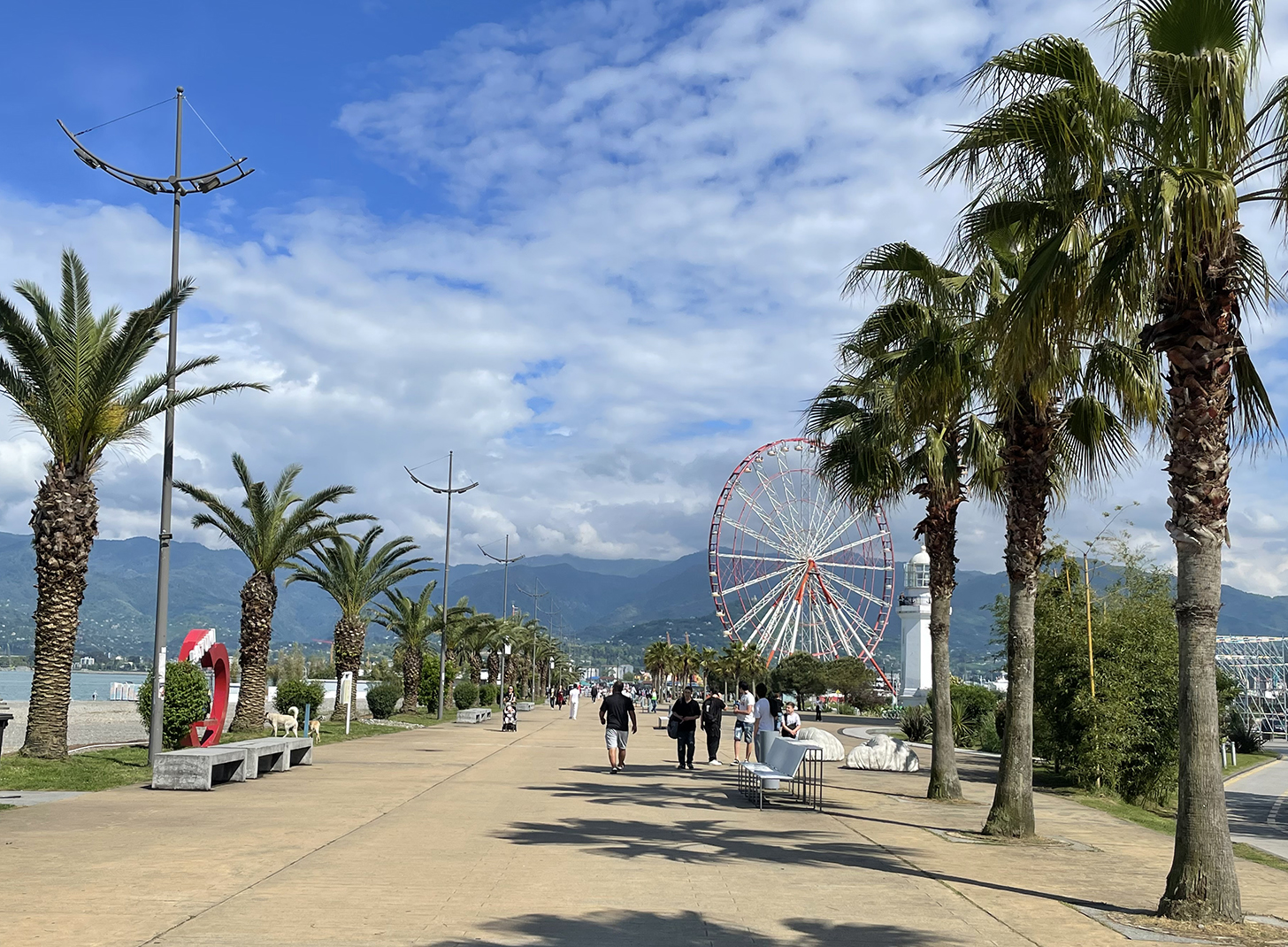
The city’s greatest asset is its long seafront boulevard. We would probably call it a promenade, but that hardly captures its scale. Wide pathways, green lawns, benches, sculptures and ice cream kiosks stretch for miles along the shoreline.
Early in the day it feels almost deserted, but by evening it transforms into a social hub as residents and visitors gather to watch the sun sink into the sea.
Casinos are everywhere. Alongside them are seemingly endless currency exchange booths. On one street alone I counted more than twenty. Each displayed almost identical rates for dollars, euros and roubles.
The sheer number of exchange counters is baffling. I assume many visitors arrive from neighbouring countries to gamble, bringing foreign currency with them, but it remains difficult to understand how so many businesses survive while operating virtually side by side.
Batumi is also building aggressively upwards. New hotel towers rise all along the waterfront, their mirrored facades reflecting the sea and sky. The familiar international hotel brands are well represented and more appear to be arriving every year.
Looking at the scale of development, it is hard to imagine where all the future guests will come from. The city clearly has ambitious growth plans, whether driven by tourism, gambling or both.
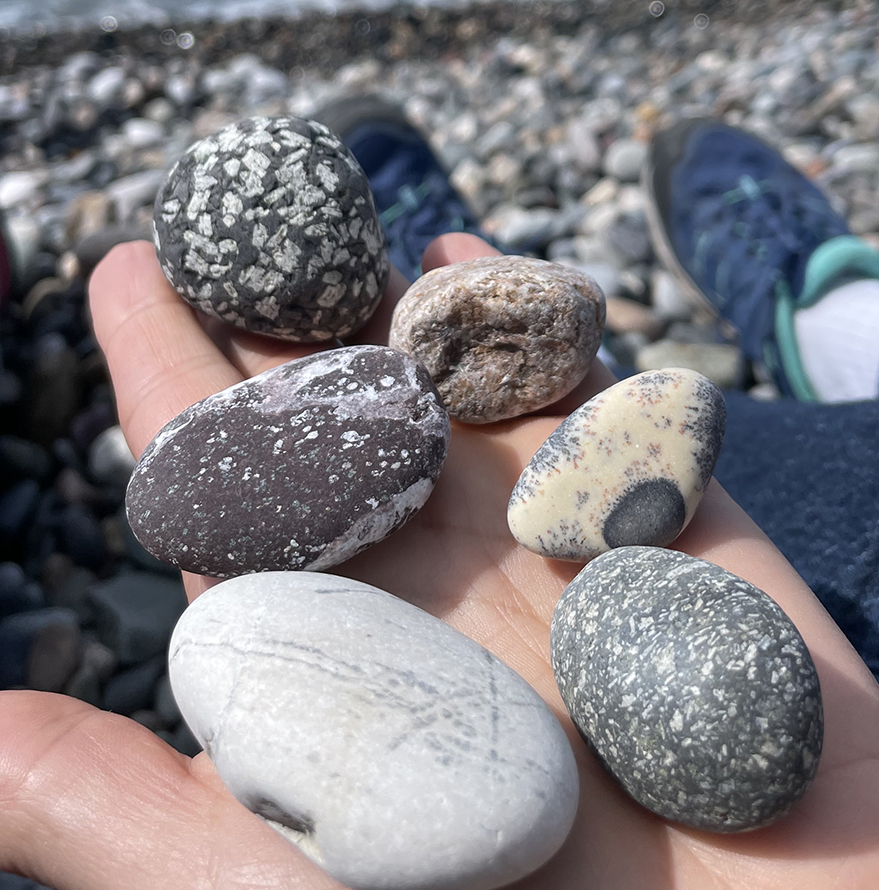
The pebble beach is unlike any I have seen elsewhere. Instead of sand, the shoreline is covered in smooth stones of every conceivable colour. Reds, blues, greens, yellows and greys create a natural mosaic. We spent far longer than expected simply sitting by the water, searching through the stones and watching the waves roll in.
Kutaisi
Kutaisi felt younger than either Tbilisi or Batumi. Students filled the parks, cafés and public spaces, giving the city a relaxed and energetic atmosphere.
Coffee culture appears to be thriving here. Independent coffee houses are plentiful and, more importantly, they are very good. The cafés seem to function as social hubs, study spaces and meeting places all at once.
The river that cuts through the city dominates everything around it. Fast flowing and surprisingly loud, it provides a constant soundtrack that can be heard from streets well beyond its banks. Numerous bridges span the water, some modern and functional, others older and more decorative.
Kutaisi is less polished and less developed than Georgia’s larger destinations, but perhaps that is part of its appeal. It feels less shaped by tourism and more representative of everyday Georgian life. Whether that impression is accurate or not, it certainly felt that way while we were there.
Baku
Baku is a city that appears determined to build the future before anyone else gets there first. The skyline is filled with ambitious architecture, featuring curves, angles and heights that seem designed to test the limits of engineering. If an architect can imagine it, Baku appears willing to construct it.
Construction cranes remain a permanent feature of the skyline and the city feels as though it is still evolving. There is an unmistakable sense of ambition. The Olympic Park and Athletes’ Village reflect that outlook. Even without having hosted the Olympic Games, the infrastructure is already in place, seemingly ready for a future bid.
One curious feature of Baku is how quiet it feels in the mornings. We headed out around 9am in search of breakfast and found surprisingly little open. The streets were sparsely populated and much of the city appeared asleep. The same pattern was noticeable elsewhere in the region. Daily life seems to start later than many Western Europeans might expect.
The central district where we stayed was protected by manned barriers controlling vehicle access. Security personnel checked approaching cars and only permitted authorised vehicles to enter. Taxis waited outside the perimeter for passengers. The result was an unusually calm city centre, with very little traffic and streets that were easy to cross on foot.
Like Tbilisi, many of the streets are cobbled. Unlike Tbilisi, however, they are generally immaculate. The contrast between the two cities is striking. Where Tbilisi often feels worn and weathered, Baku feels polished and carefully maintained.
Everything appears orderly. Streets are clean, public spaces are tidy and drivers routinely stop at pedestrian crossings. Whatever one thinks of Azerbaijan’s political system, from a visitor’s perspective Baku feels safe, efficient and easy to navigate. It is an intriguing blend of futuristic ambition, strict organisation and architectural confidence.